Reala Ace Mixed Light
A restrained, cinematic Reala Ace recipe built for the situations where Portra is too daylight-warm and Classic Chrome is too contrasty — mixed indoor/outdoor afternoon light. X-Trans V exclusive.
Mixed light · Cinematic · Travel
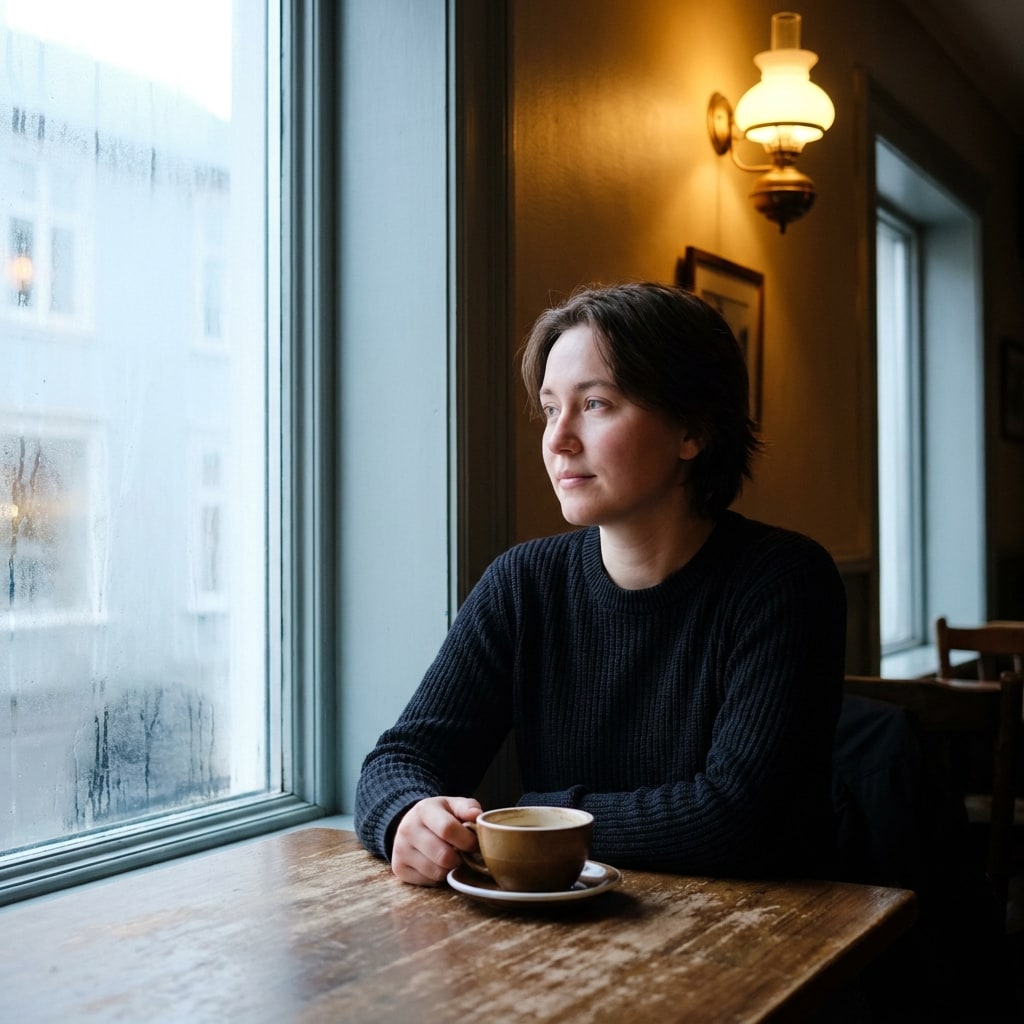
Sample look
What this recipe is reaching for
A representative scene in the Reala Ace (mixed-light cinematic interpretation) register this recipe targets — the colour, contrast, and mood it tries to land straight out of camera.
AI-rendered approximation (Gemini 3 Pro Image, prompted with the recipe's Fuji simulation and settings). Not a photograph shot with this recipe — real shots will vary with your light and subject.
Settings
15 parameters
Look
- Film Simulation
- Reala Ace
- Dynamic Range
- DR400
Tone
- Highlight
- −1
- Shadow
- 0
Color
- Color
- −1
- White Balance
- Daylight (5500K)
- WB Shift
- Red +1 · Blue −2
- Color Chrome FX
- Strong
- Color Chrome FX Blue
- Weak
Detail
- Sharpness
- −1
- Noise Reduction
- −4
- Clarity
- −2
Texture
- Grain Effect
- Weak, Small
Exposure
- ISO
- Auto, up to ISO 6400
- Exposure Comp.
- +1/3 to +2/3 EV
Most “afternoon portrait” recipes assume you’re outdoors in clean daylight. This one is for the harder case: a subject by a window, a corner of a café with one bright wall, a stairwell with light from one side. Reala Ace was specifically designed for mixed light — its Hyper Reala color matrix renders skin honestly across both daylight and tungsten in the same frame, which is the situation that defeats Classic Negative recipes built around committed daylight WB.
Why this base, not Portra or Classic Chrome
The Kodak Portra 400 recipe on this site is the right call when you’re outside in golden hour with no mixed sources. But take Portra’s WB shift (Red +2 / Blue -4) into a window-lit interior and the bounce light tips green-magenta; everything that was beautifully warm outdoors goes sickly when half the frame is tungsten and half is sky.
Classic Chrome handles mixed light better than Classic Negative, but its contrast and Color Chrome FX response punch up the wrong things in a quiet domestic frame — the red of a kitchen wall, the navy of a chair — and competes with faces for attention.
Reala Ace at -1 Color, +1/-2 WB, DR400 is the in-between recipe. It commits to neither extreme, which is exactly why it survives the mixed-source frame intact.
How to shoot it
Meter for skin and let the +1/3 to +2/3 EV lift carry the frame; Reala Ace responds well to a slightly bright exposure, and the -1 Highlight gives you headroom to do it safely. The WB shift of Red +1 / Blue -2 against a 5500K Daylight base is the quiet warmth in the recipe — enough to feel like late afternoon without tipping into orange when the light is purely daylight.
Color Chrome Effect Strong deepens foliage, brick and painted surfaces so the desaturated Color -1 does not flatten the world, while Color Chrome FX Blue Weak adds just enough density to skies and denim to feel filmic. Clarity -2 and Sharpness -1 finish the softness; Grain Weak / Small keeps texture present without becoming a stylistic statement.
When this beats the Portra recipe
Use this recipe when:
- The subject is near a window with daylight on one side and a warm interior on the other.
- You’re shooting through a doorway or in a stairwell where light sources mix.
- You want a single recipe that doesn’t need adjusting as you walk from the patio into the dining room.
- You’re on an X-Trans V body and already have Reala Ace — there is no reason to fall back to Portra’s stricter daylight commitment.
Use the Kodak Portra 400 recipe instead when:
- You’re outdoors in golden hour with no mixed sources.
- You want the committed warm-and-soft Portra portrait look, not Reala Ace’s quieter restraint.
What to avoid
This is not a high-contrast street recipe — pushing Shadow above 0 or Highlight to -2 will crush the very softness the look depends on. Avoid using it under heavy tungsten or neon (a fully tungsten-lit room, a neon sign at night): the Red +1 / Blue -2 shift assumes some daylight in the mix, and pure tungsten reads sickly without a white balance change to Incandescent. And do not expect Velvia-style punch from skies or foliage; if you want louder color, this is the wrong base — reach for Classic Chrome or Velvia and leave Reala Ace for the quieter frames it was designed for.
X100VI · X-T50 · X-E5 · X-M5 · X-T5 · X-H2 · X-H2S
Questions
5 answers
Portra 400 is built around Classic Negative with a committed warm WB shift (Red +2 / Blue -4) for golden hour and clean daylight portraits. Reala Ace Mixed Light uses a gentler shift (Red +1 / Blue -2) and Reala Ace's own native restraint, which holds up under mixed indoor/outdoor light where Portra's strong warmth would tip too far. If you only have one Fuji body and shoot mostly outdoors at golden hour, use Portra; if you're on X-Trans V and shoot through a window or in shaded interiors as much as outside, this is the better default.
Reala Ace ships natively on the X100VI, X-T50, X-E5 and X-M5, and arrives via firmware on the X-T5, X-H2 and X-H2S. Older X-Trans IV bodies (X-T4, X-Pro3, X100V, X-S20, X-T30 II) cannot select Reala Ace at all — there is no firmware backport. If you're on X-Trans IV, use the Kodak Portra 400 or Kodak Gold 200 recipe instead.
Color -1 keeps skin from going pink under warm afternoon light bouncing off interior walls, and Sharpness -1 softens micro-contrast so faces and fabric look more like a scanned print than a digital file. Together they protect the cinematic restraint that defines this look — neither setting reads as a stylistic statement, but the file would feel wrong without them.
The whole point of this recipe is that you don't have to change anything — the Red +1 / Blue -2 shift sits between pure daylight and warm tungsten, so a window-lit interior, a covered porch, and an open courtyard all render in the same tonal family. That is the mixed-light brief Reala Ace was originally built to serve.
DR400 protects bright windows and sky detail that would otherwise clip in afternoon sun pouring into a darker room, and Highlight -1 then rolls the remaining highlights into a gentler shoulder. The combination is what gives the recipe its filmic, non-digital top end without losing window light into pure white.